
Every child learns tennis at a different speed. One picks up a forehand in two weeks, another needs a month just to feel comfortable holding the racquet, and both are completely normal.
That’s the main reason a junior tennis private lesson is worth considering: the coach can adjust to your child on the spot instead of to a whole group.
But “private” doesn’t automatically mean “good.” The coach, the teaching style, and the training environment all matter.
This guide explains what private lessons for juniors involve, seven things to look for, the questions to ask before you book, and the mistakes parents most often make when choosing a coach.
What Are Private Tennis Lessons for Juniors?
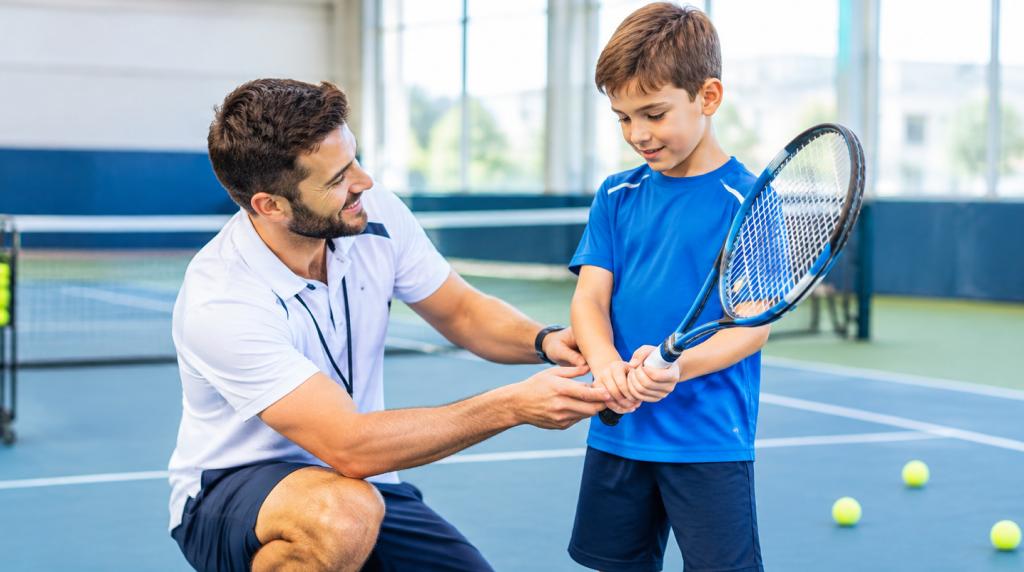
Private tennis lessons for juniors are one-on-one sessions where a coach works with a single player. The format is simple, but it changes how the hour feels.
How One-on-One Tennis Coaching Works
- Individual attention and feedback. Every swing gets seen, and corrections arrive while the movement is still fresh.
- Drills tailored to the player’s ability. If a drill is too easy, the coach raises the challenge. If it’s too hard, the coach breaks it into smaller steps.
- Training goals based on age and experience. A six-year-old might work on tracking the ball and balance. A thirteen-year-old might work on consistency and footwork.
A coach can also stop and explain something a different way, which helps kids who don’t respond to the first explanation.
Private Lessons vs. Group Tennis Lessons
Neither format is best for every child. Private lessons offer more individual feedback and a pace set entirely by the player. Group lessons offer more social interaction, built-in practice partners, and usually a lower cost per session.
Some kids feel braver in a group because everyone is learning together. Others feel more comfortable with one coach and no audience. Many families mix the two.
If you’re also weighing whether an individual sport suits your child’s personality, our guide to the best sports for kids compares team and individual options.
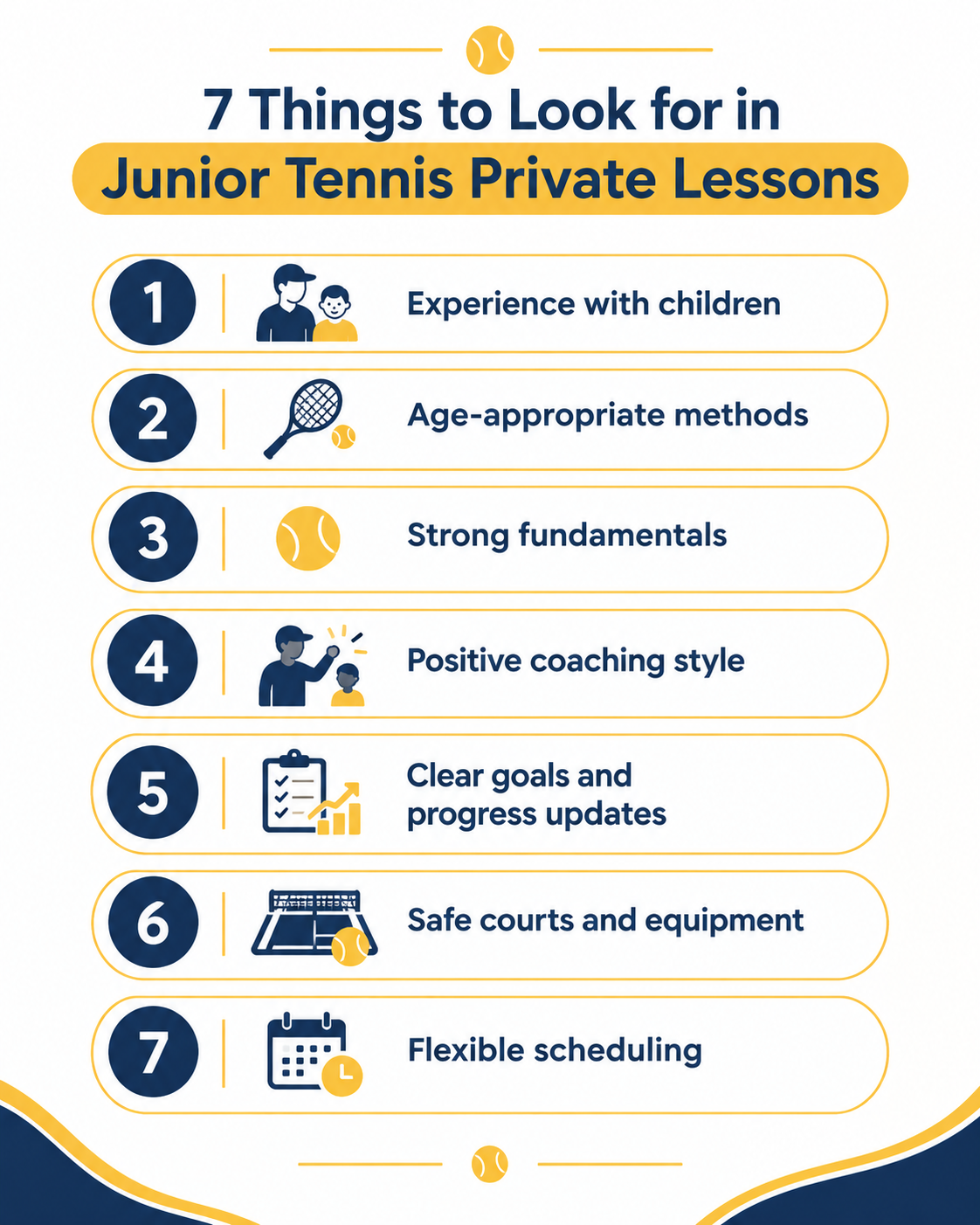
7 Things to Look for in Junior Tennis Private Lessons
Use this as a checklist when you compare coaches or programs.
1. Experience Working with Children
Playing tennis well and teaching children well are different skills. Look for a coach who explains things simply, stays patient when a child gets distracted, and knows how to keep a lesson fun. You can meet the coaches at Champion Sports Academy to see what that looks like.
2. Age-Appropriate Training Methods
Younger beginners usually do better with short activities, modified equipment, and simple instructions. Tennis Canada describes progressive tennis as a way to scale the game to a child’s size and skill, using adapted balls, racquets, and courts so kids can enjoy rallying sooner. Ask whether a coach adjusts the equipment and activities to your child’s age rather than running a smaller version of an adult lesson.
3. A Focus on Fundamental Tennis Skills
Flashy shots can wait. A good junior lesson builds the basics first:
- Racquet grip and ready position
- Forehand and backhand
- Serving and returning
- Footwork, balance, and court positioning
These skills support everything that comes later, and fixing a weak foundation is harder than building a solid one from the start.
4. A Positive and Supportive Coaching Style
Encouragement works better than pressure, especially for young players. Listen for specific, constructive feedback, like “nice, you moved your feet before you swung,” rather than only “good job” or only corrections. A child who feels safe making mistakes is more willing to try harder things.
5. Clear Goals and Progress Tracking
You should know what your child is working on and how you’ll tell it’s working. A good sign is a coach who can name two or three goals for the next few weeks and gives you short updates on technique, consistency, movement, and enjoyment.
6. Safe and Suitable Court Facilities
Check that the courts are in good condition, the equipment fits your child, and an adult is supervising. Age-appropriate activities matter too. A lesson for a nine-year-old shouldn’t be an adult session turned down a notch.
7. Flexible Scheduling and Lesson Options
A lesson that doesn’t fit your family’s schedule won’t last. Ask about lesson length, frequency, and cancellation terms. A child who is tired after a long school day may learn less in a late slot than on a weekend morning.
What Are the Benefits of Private Tennis Lessons for Juniors?
Results vary from child to child, and no coach can promise a specific outcome. That said, private lessons may help with:
- Personalized instruction that fits your child’s pace
- A better understanding of tennis technique
- More focused practice, since little time is spent waiting for a turn
- Improved coordination and movement
- Increased confidence and sportsmanship
- Preparation for recreational matches or competition, when your child is ready and interested
Many families find the biggest difference is how quickly small problems get noticed and fixed. For the wider picture of what the sport can offer, see our post on the benefits of playing tennis for fitness and health.
How to Choose Lessons Based on Your Child’s Age and Skill Level
Treat the stages below as rough guides, not rules. Readiness and development vary widely, and a child can be ahead in one area and behind in another.
Young Beginners
Focus on enjoyment, basic coordination, simple racquet skills, and age-appropriate equipment. Sessions should feel like play. If you’re unsure whether your child is ready, our post on the best age to start kids tennis lessons explains what readiness looks like.
Developing Junior Players
Once a child can make contact and rally a little, lessons can shift toward stroke consistency, footwork, serving, and longer rallies. This is a good stage for a coach to start tracking specific skills.
Intermediate and Competitive Juniors
Players at this level may work on tactical awareness, match preparation, movement, and individual improvement goals. Competition should be something your child wants, not something expected of them.
What Should Parents Ask Before Booking a Private Tennis Lesson?
Bring this checklist to your first conversation with a coach:
- What experience do you have coaching junior players?
- How do you adapt lessons to my child’s level?
- What skills will my child work on first?
- How will you communicate progress?
- What equipment should we bring?
- Can my child try an introductory lesson?
- What are the lesson fees, cancellation terms, and available schedules?
Pay attention to how the coach answers, not just what they say. Clear, friendly, jargon-free answers are a good sign.
How Often Should Juniors Take Private Tennis Lessons?
There’s no single right answer. Frequency depends on your child’s age, interest, schedule, experience, and goals. Many families start with one lesson a week and adjust from there. Practice between lessons helps too.
Even short sessions of hitting against a wall or playing simple games can reinforce what the coach taught.
It also helps to keep the bigger picture in mind. The Canadian 24-Hour Movement Guidelines recommend that children and youth aged 5 to 17 accumulate at least 60 minutes of moderate to vigorous physical activity each day, across a variety of activities. A weekly lesson is a small slice of that, so unstructured play and other sports fill in the rest.
Common Mistakes to Avoid When Choosing a Junior Tennis Coach
- Choosing only by price. The cheapest lesson isn’t a bargain if your child dreads going.
- Expecting rapid results. Skills build over weeks and months, and progress is rarely a straight line.
- Ignoring the child’s comfort with the coach. Ask your child how the lesson felt, not just whether it was fun.
- Selecting training that is too advanced. A lesson that’s too hard teaches frustration, not tennis.
- Overlooking safety and communication. Supervision, equipment fit, and clear updates all matter.
- Focusing only on winning. Wins come more easily when the learning underneath is solid.
Where to Find Junior Tennis Private Lessons in London, Ontario
If you’re looking for junior tennis lessons in London, Ontario, Champion Sports Academy offers junior tennis programs alongside private lessons, so you can choose a format that fits your child.
Parents searching for private tennis coaching for kids in London, ON can start by asking about an introductory lesson and talking with a coach about goals, schedule, and what junior tennis training would look like for their child.
To learn more about the academy, read our post on why Champion Sports Academy is beneficial for your child’s sports. Confirm current programs, availability, and fees directly with the academy before booking.
Frequently Asked Questions
What is the best age to start private tennis lessons?
There’s no fixed age. Many children are ready for short, play-based lessons around five to seven, but it depends on attention span, coordination, and interest. Some start in a group class first and add private lessons later.
Are private tennis lessons worth it for juniors?
They can be, especially for a child who wants focused feedback, feels shy in a group, or needs help with a specific skill. They aren’t necessary for every child, and group classes are a good option for many beginners.
How long should a junior tennis lesson last?
Younger children often do best with shorter sessions, commonly around 30 minutes, while older or more experienced players may handle 45 to 60 minutes. Ask the coach what suits your child’s age and energy.
How often should children take tennis lessons?
Many families begin with one lesson a week and adjust based on interest, schedule, and progress. Short practice between lessons can help.
What equipment does a beginner junior tennis player need?
A junior racquet sized to your child, comfortable athletic clothing, court shoes, and water. Ask the coach what’s provided and what to bring, since sizing is easiest to check in person.
Are private tennis lessons better than group lessons?
Not in every case. Private lessons give more individual attention, while group lessons offer social play and lower cost. The better choice depends on your child’s personality, goals, and budget.
How can parents measure progress in junior tennis?
Look at technique, consistency in rallies, movement, confidence, and enjoyment. A good coach will share specific updates so you can see the changes.
Finding the Right Tennis Coach for Your Child
The best private tennis lessons for juniors come down to a few simple things: a qualified, supportive coach, training that fits your child’s age, realistic goals, and an experience your child enjoys. Take your time, ask questions, and trust your child’s reaction after a trial lesson. A child who wants to go back is telling you something important.
Ready to Book a Junior Tennis Lesson in London, Ontario?
Looking for a coach who fits your child?
Get in touch with Champion Sports Academy to ask about junior tennis lessons, private coaching options, and what to expect from a first session.