
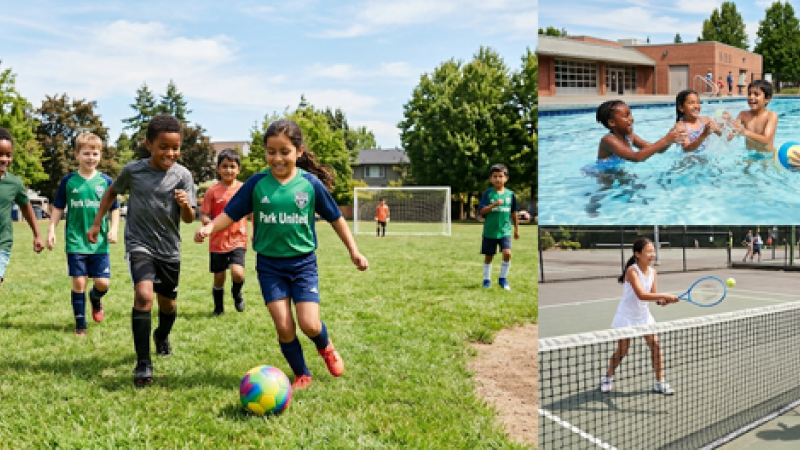
Every parent has asked some version of this question at least once. You want your child active, confident, and making friends, and the sheer number of options, soccer, swimming, basketball, dance, martial arts, tennis, can make it feel like there’s a single correct answer hiding somewhere. There isn’t. What actually matters is matching the sport to where your child is developmentally and what kind of activity genuinely holds their interest.
This guide walks through how to think about age-appropriate sports, why racquet sports deserve far more consideration than they usually get, how to tell if your child is better suited to a team or individual activity, and exactly what to expect when you sign them up for their first lesson.
What Actually Makes a Sport “Best” for a Kid
Before getting into specific sports, it helps to reframe the question. Parents often search for the single best sport as though it’s a fixed ranking, when in reality it depends almost entirely on fit.
According to HealthyChildren.org, a resource from the American Academy of Pediatrics, most children develop the basic motor skills needed for simple organized sports by around age six, but they may still lack the hand-eye coordination or strategic understanding that more complex sports demand. That means a sport that’s perfect for one six-year-old might genuinely frustrate another, not because either child is behind, but because kids develop at different rates even within the same age group.
The most useful question isn’t “what’s the best sport.” It’s “what sport fits my child’s current stage, and will they actually want to keep showing up.”
Best Sports for Kids by Age
Ages 2 to 5: Fun Over Competition
At this stage, sports should be almost entirely unstructured. The goal is building basic gross motor skills, running, jumping, throwing, catching, through play rather than formal rules. Swimming, tumbling, and simple ball games are ideal here, since they build coordination and body awareness without requiring a child to understand strategy or teamwork yet.
Ages 6 to 9: Building Coordination and Teamwork
By six, most kids have the physical readiness for simple organized sports, though hand-eye coordination and an understanding of teamwork are still developing. This is a good window for sports with flexible rules and modified equipment: soccer, basic tennis with a lighter racquet and softer ball, or beginner gymnastics. The emphasis should stay on learning new skills, not winning.
Ages 10 to 12: Structured Skill-Building
Kids in this range can start handling more structured coaching, learning proper warm-up routines, and understanding basic strategy. This is also a good age to introduce a wider variety of sports rather than narrowing down, since exposure to different movement patterns builds a broader athletic foundation than specializing too early.
Ages 12 and Up: Strength, Strategy, and Specializing
As kids move into their teens, sports naturally become more competitive and strength and strategy play a bigger role. If a child has found a sport they genuinely love by this point, this is often when more serious training and competition start to make sense, provided it’s still driven by their own interest rather than pressure.
Sports Worth Considering Beyond the Usual List<
Most “best sports for kids” lists lean heavily on a handful of familiar names and stop there. Those are all genuinely solid choices, but it’s worth looking at the full range, including a few sports that don’t always get the credit they deserve.
Soccer
Soccer remains one of the most accessible entry points into organized sport, and for good reason. It requires minimal equipment, the rules are easy to pick up, and the constant movement suits shorter attention spans well. It’s also one of the most widely available youth leagues in most communities, which makes it easy to find a program that fits your schedule.
Swimming
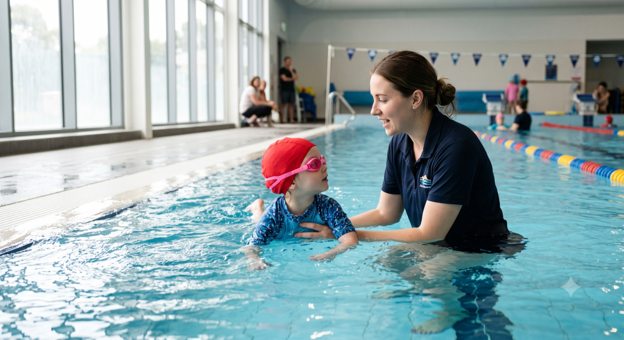
Swimming is often recommended as a genuinely essential first activity, not just for the fitness and coordination benefits, but because it’s a real safety skill. Learning to swim early helps protect kids around water long before it becomes a competitive sport, and it builds full-body coordination in a low-impact way that few other activities match.
Basketball
Basketball builds coordination, teamwork, and cardiovascular fitness all at once, and it scales well from casual driveway play to structured league competition as a child grows. It’s a strong fit for kids who enjoy fast-paced, high-energy group activity.
Tennis
Tennis lessons for young players typically start with lighter racquets, softer balls, and a smaller court, so kids aren’t fighting equipment sized for adults. Children build grip technique, basic footwork, and simple rally skills long before they’re ready for a full-sized game. Tennis lessons built specifically for beginners give kids a structured, age-appropriate way into the sport rather than a scaled-down adult class.
Badminton
Badminton is often underrated as a kids’ sport, but the low-impact nature of the shuttlecock, it doesn’t bounce and slows quickly, makes it easier for younger kids to track and return than a fast-moving ball. It’s also genuinely fun almost immediately, which matters a lot for keeping a young child engaged. Badminton coaching designed for true beginners focuses on grip and footwork before anything else, so kids build a real foundation instead of just swinging at a shuttle.
Pickleball
Pickleball has exploded in popularity recently, and it’s a particularly good entry point because the court is smaller and the paddle is easier to control than a full tennis racquet. Kids get many of the same coordination benefits as tennis with a slightly gentler learning curve. A pickleball camp for kids is a great low-pressure way for a child to try the sport in a fun, social setting before deciding if they want to stick with it.
Is Your Child Better Suited to a Team Sport or an Individual Sport?
This is one of the most common things parents genuinely struggle with, and it rarely gets a direct answer.
If your child is naturally social, thrives around a group, and doesn’t mind sharing the spotlight, a team sport like soccer or basketball can be a great fit. The camaraderie and shared responsibility of a team environment plays to those strengths.
But if your child is quieter, gets overwhelmed in group settings, or tends to hang back rather than assert themselves in a crowd, an individual sport is often a better starting point, and this is exactly where racquet sports shine. Tennis, badminton, and pickleball give a child full ownership over their own performance without the social pressure of a large team, while still being taught in a group class setting, so they get the social benefits of being around other kids without needing to compete for attention or a starting position.
Neither option is objectively better. It genuinely comes down to which environment lets your child relax enough to actually enjoy learning.
What to Look for in a Kids’ Sports Program
Once you’ve got a general direction, not every program delivering that sport is built the same way. Here’s what actually matters when comparing options.
Age-appropriate structure.
A good program adjusts equipment, rules, and pacing to the child’s actual developmental stage rather than running a scaled-down version of an adult class.
Coaches with real experience teaching young beginners.
Coaching a motivated teenager and coaching a distractible six-year-old require very different skills. Look for coaches who are specifically comfortable and patient with true beginners.
A fun-first, low-pressure environment.
Programs that introduce competitive pressure too early tend to burn kids out faster. The early goal should always be building a love of movement, not producing a competitive athlete.
Equipment provided.
Especially for younger kids who might change interests quickly, a program that provides loaner gear removes a real barrier to just trying something out.
Room to keep progressing.
A good program should have a natural next step as your child’s skills grow, rather than leaving them stuck at the same level indefinitely.
What a First Lesson or Practice Actually Looks Like
A lot of the hesitation parents feel about signing a child up comes down to simply not knowing what to expect. A good first lesson, regardless of sport, usually starts with a coach evaluating where the child is at: comfort with the equipment, basic coordination, attention span, rather than jumping straight into drills.
Most programs provide loaner equipment for the first few sessions, so you don’t need to buy a racquet or paddle before you’re sure your child will stick with it. Comfortable athletic clothes and proper court shoes are usually all that’s needed. Younger kids often do better in smaller group classes where they still get individual attention but also have other kids around them, which tends to keep the energy up and the nerves down.
How Many Sports Should a Kid Try Before Specializing
The short answer, based on current pediatric guidance, is more than one, and for longer than most parents assume. The American Academy of Pediatrics has cautioned against early sports specialization specifically because repetitive, single-sport training on a still-growing body increases the risk of overuse injuries like tendonitis and growth plate strain.
Trying multiple sports through the elementary and early middle school years, rather than locking into one early, gives a child a broader athletic foundation and more chances to discover what they actually enjoy. A child who tries tennis, soccer, and swimming over a couple of years isn’t behind, they’re building the coordination and body awareness that makes picking up any sport later genuinely easier.
Getting Started With Champion Sports Academy in London, Ontario
If you’re a parent in the London, Ontario area trying to figure out where to start, Champion Sports Academy runs beginner programs across tennis, badminton, pickleball all built specifically for kids rather than adapted from adult classes. If your child hasn’t settled on a favorite yet, our summer camp is a great low-pressure way to try several sports in one place before committing to a specific program.
Ready to help your child find their sport?
Book a trial class today or get in touch with our team to ask about age groups, schedules, and which program might be the best starting point for your child.
Frequently Asked Questions
What is the best first sport for a young child?
There’s no single best first sport, but activities that build basic coordination without requiring strategy or teamwork, like swimming or simple racquet games, tend to work well for kids under six.
Is it better to start with a team sport or an individual sport?
It depends on your child’s personality. Social, group-oriented kids often do well in team sports, while quieter or more reserved kids frequently thrive in individual sports like tennis or badminton, which still offer a social class environment without team pressure.
What sport builds the most confidence in a shy kid?
Individual sports tend to build confidence more directly in shy children, since progress is entirely their own and doesn’t depend on teammates. Racquet sports in particular let a child see their own improvement clearly and quickly.
How many sports should my child play before choosing one?
Most pediatric guidance recommends trying several sports through childhood rather than specializing early, both to reduce overuse injury risk and to help a child find genuine interest rather than a parent’s assumption of what they’ll like.
The Right Sport Is the One They Want to Keep Playing
At the end of the day, the best sport for your child isn’t the one that ranks highest on a list. It’s the one they ask to go back to. Pay attention to what actually lights them up, whether that’s the fast pace of a team sport or the focused independence of a racquet sport, and be willing to let them try a few before settling on one.
The goal was never to raise a champion. It’s to help your child build a genuine, lasting relationship with movement, one they’ll carry with them long after any single season ends.