
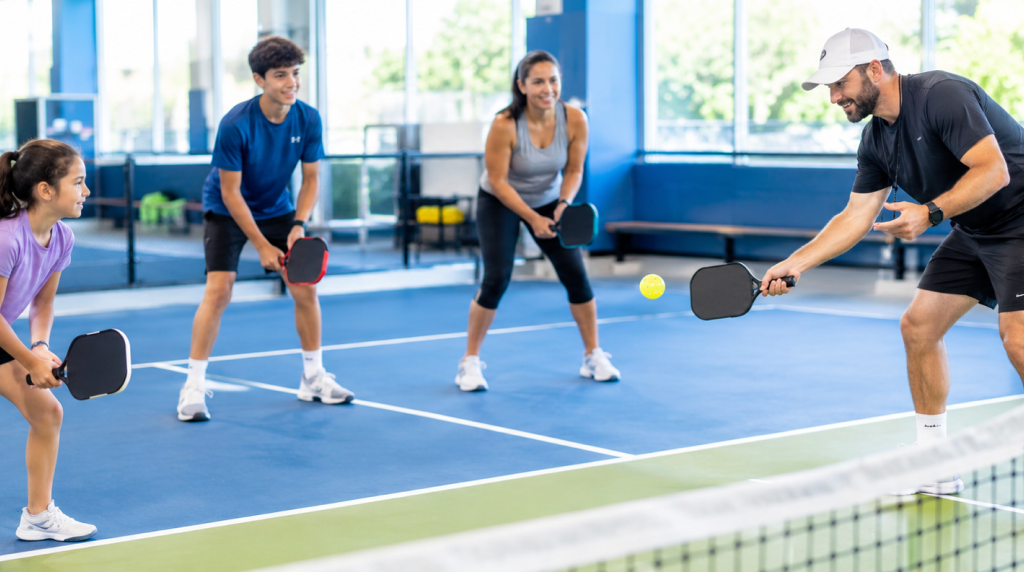
That growth is great news, but it also means more choices, and not every program is built the same way.
If you’re searching for the best pickleball coaching programs in London, Ontario, the honest answer is that the “best” one depends on the player.
Age, experience, goals, and learning style all matter. A seven-year-old who needs games and encouragement needs something very different from an adult who wants to fix their serve.
This guide walks through why coaching helps, seven things to look for, how to choose for kids, how private lessons compare with group coaching, and the questions to ask before you sign up for any pickleball coaching program in London, Ontario.
Why Join a Pickleball Coaching Program?
You can absolutely learn pickleball by playing with friends. Plenty of people do, and it’s fun. But there’s a difference between playing the game and learning it well.
Without a coach, small habits sneak in early, like a stiff grip, a late paddle, or standing in the wrong spot, and they get harder to change the longer they stay.
A coach spots those things while they’re still easy to fix, and explains the “why” behind the rules so the game makes sense faster.
Learn the Basic Rules and Techniques
Pickleball looks simple until you’re standing on the court wondering where to stand, who serves next, and why everyone keeps shouting about the kitchen. Good coaching clears that up early. Beginners usually learn:
- Court layout and scoring
- How to serve and return
- Paddle control and ball placement
Learning these with guidance saves the awkward “was that a fault?” moments that can make new players feel out of place.
Develop Coordination and Footwork
Pickleball is more athletic than it first appears. Every shot asks for hand-eye coordination, balance, and quick decisions. Coaching helps players build:
- Hand-eye coordination, by tracking and meeting a slow, bouncing ball
- Balance and movement, including small steps, a ready stance, and recovering after each shot
- Reaction time and agility, especially during quick exchanges at the net
These skills carry well beyond the court. Players who move efficiently tend to feel more comfortable in other sports too.
Build Confidence and Sportsmanship
Guided practice gives beginners a safe place to try, miss, and try again. Over time, players develop patience, learn to cheer for partners in doubles, and practise respect for opponents.
Confidence tends to grow in small steps, one cleaner serve or longer rally at a time, rather than through a single big breakthrough.
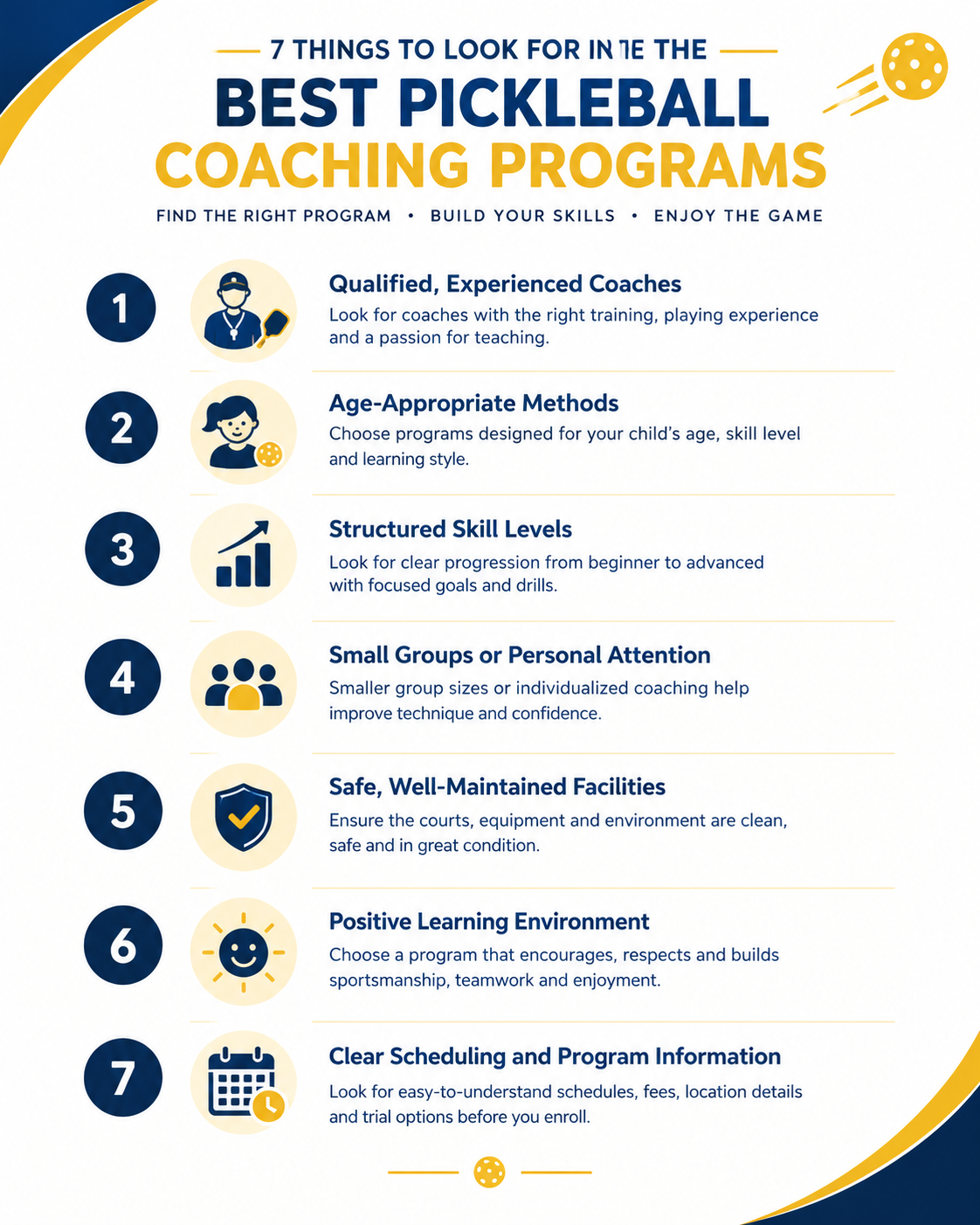
7 Things to Look for in the Best Pickleball Coaching Programs
This is the checklist worth taking with you when you compare programs.
1. Qualified and Experienced Coaches
Playing well and teaching well are different skills, so ask about a coach’s teaching experience, especially with beginners or children. It’s also reasonable to ask about certification.
In Canada, Pickleball Canada worked with Tennis Canada’s Tennis Professionals Association to build a national coach education program for pickleball that is recognized by the National Coaching Certification Program. Pickleball Canada notes that certification stays valid for three years, so it’s fair to ask whether a coach’s training is current.
You can also meet the our coaches at Champion Sports Academy to get a sense of who you’d be learning from.
2. Age-Appropriate Coaching Methods
A good program adjusts to who is on the court. Children need clear, engaging instructions and short activities. Teens may want faster-paced drills.
Adults often want to understand technique and strategy. Think about age, physical ability, and previous sports experience, and check that younger players get simple directions they can follow without feeling lost.
3. Structured Lessons for Different Skill Levels
Look for a clear progression:
- Beginners should focus on rules, grip, serving, and basic movement.
- Intermediate players can work on consistency, positioning, and shot selection.
- Advanced players may benefit from tactical practice and match preparation.
If a program puts everyone in one session regardless of level, beginners can feel overwhelmed and experienced players can feel bored.
It also helps to ask how players move from one level to the next. A good program can explain what a player needs to show before moving up, such as a reliable serve or comfortable rallying at the net.
That kind of clarity keeps progress from feeling random, and it gives you a way to measure improvement beyond “I think I’m getting better.”
4. Small Groups or Personalized Attention
Feedback is where most improvement happens, and feedback gets thinner as groups get bigger. Ask how many players join a typical session and how much individual coaching each person receives.
Some players prefer the focus of private lessons, while others enjoy the energy of a group. We compare the two in more detail below.
5. Safe and Well-Maintained Facilities
Check the court surfaces, nets, lighting, and available equipment, and notice whether the space feels clean and organized. For players in this part of Ontario, indoor courts are worth considering because they allow consistent practice through the year, regardless of weather.
If you’re comparing indoor and outdoor options, our guide to indoor vs outdoor pickleball explains how the ball, the conditions, and the learning experience differ.
6. A Positive and Supportive Learning Environment
The tone of a program matters as much as its curriculum. Look for encouragement, constructive feedback, and respect between players and coaches. Beginners should be able to learn without unnecessary pressure, and for children, sessions should balance learning with enjoyment.
If you can, watch part of a session and notice how the coach reacts when someone makes a mistake.
7. Convenient Scheduling and Clear Program Information
A great program doesn’t help if you can’t get there consistently. Review lesson times, program length, and location. Ask about fees, equipment requirements, and cancellation policies, and check whether a trial session is available before you commit. Clear, upfront answers are a good sign.
How to Choose Pickleball Coaching for Kids
Parents have a few extra things to think about. Kids don’t always tell you when something isn’t working, so it helps to know what to look for.
Focus on Fun and Skill Development
Children learn best when practice feels like play. Look for engaging drills and games, plus a gradual move from basic skills to more advanced ones. A program that jumps to complicated strategy too soon can turn an excited child into a reluctant one.
Consider the Child’s Age and Experience
Beginners may need extra help with paddle control and movement. Kids who already play another racquet sport might progress differently, since some skills transfer and some need to be unlearned. For example, tennis players often find the kitchen rule surprising.
There’s no single timeline that fits every child, so judge readiness by interest, coordination, and attention span rather than a birthday. For a closer look at what a kids’ session covers, see our guide to pickleball lessons for kids.
Look for Confidence-Building Coaching
Encouraging effort, rather than focusing only on winning, helps children stay motivated. Look for positive, specific feedback and realistic goals. It also helps if the program gives kids a chance to practise with other children, because shared laughs and friendly rallies make them want to come back.
Private Pickleball Lessons vs. Group Coaching
Both formats work well. The better choice depends on the player’s goals, budget, confidence, and preferred learning environment.
| Feature | Private Lessons | Group Coaching |
| Attention | More individualized feedback | Coach shares attention among participants |
| Learning pace | Can be tailored to the player | Usually follows a shared lesson plan |
| Social interaction | More limited | More opportunities to practise with others |
| Suitable for | Players wanting focused instruction | Beginners and players who enjoy group activities |
| Cost | Often costs more per session | May cost less per participant |
Private pickleball lessons are a good fit if you want focused work on a specific skill, feel nervous in a group, or want to progress at your own pace. Group coaching is often a great starting point, especially for beginners, because you get coaching, practice partners, and a friendly atmosphere in one place.
Many players combine the two, using group sessions as a regular routine and the occasional private lesson to work on one stubborn habit.
What Should Beginners Learn in Their First Pickleball Lessons?
A well-organized beginner program typically covers:
- Basic pickleball rules and scoring
- Correct paddle grip and ready position
- Serving and returning the ball
- Forehand and backhand control
- Basic footwork and court positioning
- Understanding the non-volley zone, commonly called the kitchen
- Simple drills and controlled practice games
Two rules trip up almost every new player. The two-bounce rule says the ball must bounce once on each side before anyone can volley. The non-volley zone is a 7-foot-deep area on each side of the net where you can’t hit a volley.
Pickleball Canada explains both clearly in its basic rules overview, which also notes that recreational play can use adapted rules. A good coach introduces these gradually, using drills and practice games rather than a long lecture.
Lesson content and progress will vary depending on the player’s age and experience. Adults, teens, and children often move through the same material at different speeds, and that’s completely normal.
Questions to Ask Before Joining a Pickleball Coaching Program
Use this list to compare programs on what actually matters, not just on promotional claims.
- What experience do the coaches have?
- Are programs available for beginners and children?
- How many players participate in each session?
- What skills are covered in the program?
- Are courts indoors or outdoors?
- Is equipment provided, or should players bring their own?
- What are the program fees and scheduling options?
- Can players try a session before committing?
Pay attention to how the answers are delivered. Clear, friendly, jargon-free replies usually reflect a program that has thought about its beginners.
Finding the Right Pickleball Coaching Program in London, Ontario
When you’re looking for pickleball lessons in London, Ontario, a few practical points can narrow the field quickly:
- Location and travel convenience. A program that’s easy to reach is a program you’ll attend regularly.
- Indoor training options and year-round practice. Ontario weather can interrupt outdoor play, so consider whether lessons continue through the colder months.
- Suitability for different players. Check whether the program serves children, teens, adults, and true beginners.
- Coaching format, scheduling, and lesson goals. Ask what a typical session looks like and what you can expect to improve.
- Confirming details directly. Programs change, so contact any provider to confirm current availability before booking.
Explore Pickleball at Champion Sports Academy
Champion Sports Academy is located at 609 Clarke Rd, Unit 8-9, London, Ontario. According to its website, the academy runs a multi-sport program with year-round indoor courts, group classes, and private lessons. You can visit championsportsacademy.ca to see the sports it offers.
Because programs, age groups, schedules, and fees can change, the best next step is to contact the academy directly and confirm the current pickleball coaching options before you plan around them.
Common Mistakes to Avoid When Choosing Pickleball Lessons
- Choosing a program based only on price. The cheapest option isn’t a bargain if you or your child dread going.
- Ignoring the coach’s experience with their age group. Teaching adults and teaching seven-year-olds are very different jobs.
- Joining an advanced session without understanding the skill requirements. A session that’s too hard teaches frustration, not pickleball.
- Overlooking court safety and facility conditions. Check surfaces, lighting, and supervision.
- Failing to ask about lesson structure and group size. These two details shape how much coaching you actually get.
- Expecting instant results. Improvement is gradual, and steady practice beats quick fixes.
Most of these mistakes come from rushing the decision. A short conversation with a coach, or a trial session if one is available, usually reveals more than any brochure or website description can.
Frequently Asked Questions About Pickleball Coaching Programs
What is the best age for children to start pickleball lessons?
There’s no single best age. Readiness depends on the child’s coordination, interest, and attention span, and on whether the instruction suits their age. Some children enjoy simple, play-based sessions early, while others do better a little later.
Are pickleball coaching programs suitable for beginners?
Yes. Beginner-friendly programs introduce the rules, serving, paddle control, movement, and basic game strategy at a comfortable pace, so you don’t need any experience to start.
How often should beginners take pickleball lessons?
It depends on your schedule, goals, and how your body feels after playing. Consistent lessons combined with some practice between them tend to support gradual improvement, and it’s fine to start with one session a week and adjust.
Are private pickleball lessons better than group lessons?
Neither is universally better. Private lessons offer more individualized feedback, while group lessons provide social interaction and a chance to practise with different players.
What should children bring to pickleball coaching?
Ask the provider about equipment requirements first. Comfortable sportswear, suitable athletic shoes, and water are common starting points, plus a paddle if one isn’t provided.
Where can I find pickleball coaching programs in London, Ontario?
Research local sports academies and coaching providers, compare their program details, and contact them directly to confirm current availability, age groups, and fees.
Choose a Pickleball Program That Fits Your Goals
The best pickleball coaching programs have a few things in common: coaches with real teaching experience, lessons matched to age and skill level, a sensible group size, a safe facility, and a schedule that fits your life.
They also make the learning experience enjoyable, because the player who wants to come back is the player who improves.
Take your time, ask the questions above, and trust what you see and hear during a trial. Whether you’re choosing for yourself or for your child, the right program should support steady improvement and make you look forward to the next session.
Ready to Start Pickleball Coaching in London, Ontario?
Not sure which pickleball program fits you or your child? Ready to learn pickleball or improve your skills? Choosing the right coaching program can help you develop better techniques, improve coordination, and build confidence on the court. Whether you’re a beginner or looking to refine your game, finding coaching that matches your age, experience, and goals is an important first step.
Champion Sports Academy in London, Ontario, offers indoor sports facilities and programs for players of different ages and skill levels.See pickleball Programs at Champion Sports Academy, then reach out through the website to ask about current coaching options, age groups, schedules, and fees.